

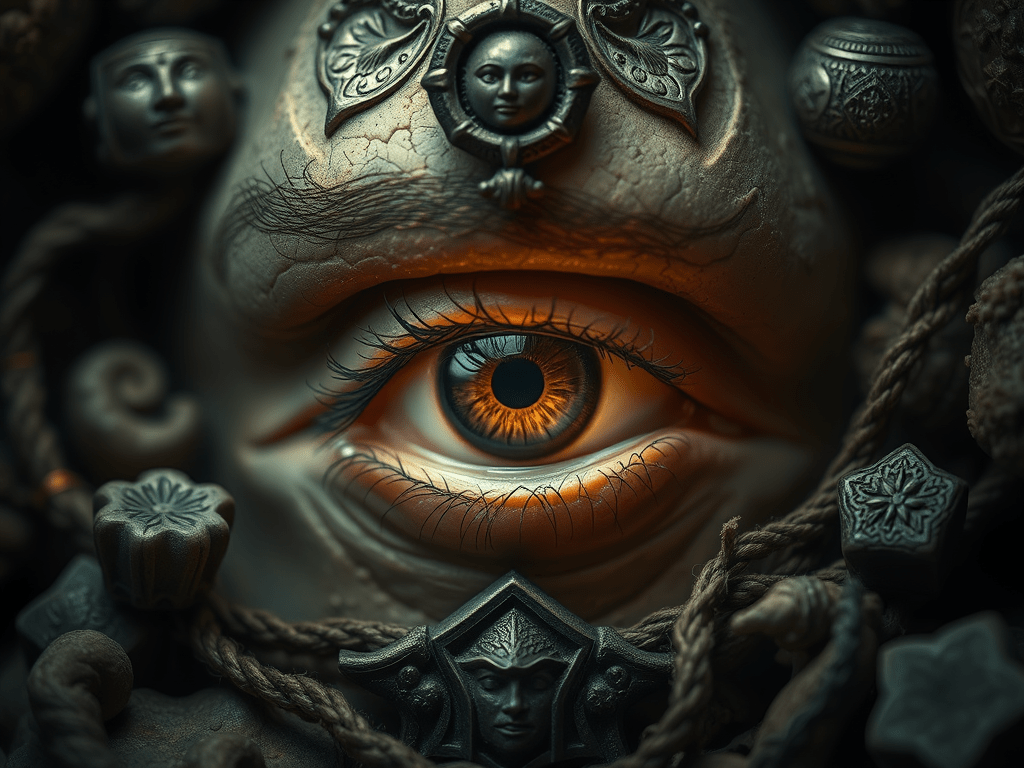
Drishti.
Nazar.
Evil eye.
Bad energy.
Different names, same idea.
Growing up, whenever someone was thriving and suddenly fell sick or faced bad luck, the explanation was always ready. Someone had cast an evil eye. When you were pretty and people looked at you too much. When you were doing well and people praised you. When you were recognized for being smart. Or sometimes, when you simply felt unwell for no clear reason. Back home, all of it could be traced back to drishti.
There was always a ritual to undo it.
My mother would take a fistful of salt. She moved it slowly around my body. It was almost like reiki as she circled my head, shoulders, and back. Then she would throw it into water. Sometimes dried red chilies were used instead, waved around the body and then dropped into the fire. I never understood the logic, but I always felt the intention. Protection. Cleansing. Care.
Over time, the idea of drishti quietly settled into me.
Even now, I fall sick often after social gatherings. Parties, celebrations, even small, pleasant get together. Almost every weekend, at least one day disappears into exhaustion. Someone will inevitably say, maybe you got drishti.
And part of me didn’t mind believing it.
There was something oddly comforting in that explanation. Almost flattering. As if being affected meant I was visible, noticeable, worthy of attention. As if I had something others could look at.
But my rational mind never fully accepted it.
That belief followed me far beyond home.
Last year, during a trek to Everest Base Camp, one of my friends fell sick. Without hesitation, she asked me to take drishti for her using salt. I did it instinctively, just as I had seen my mother do. A fistful of salt, slowly waved around her body, intention steady and sincere.
Something about it amused the rest of the group. Soon, everyone wanted it done just in case. One by one, we stood there as salt was circled around us, laughter mixing with belief, half ritual, half comfort.
Funny enough, that evening I completely lost my appetite. I could barely eat.
Our guide had been quietly observing the entire ritual that morning. Later, he noticed my untouched plate. He laughed and said maybe a fistful of salt wasn’t enough for you. You probably need a whole box.
We all laughed.
I didn’t fully believe it, but I found myself going along with it.
This past weekend, I was sick again. The word drishti returned to my thoughts.
But when I looked closely at the days leading up to it, the story shifted.
On Friday, I worked all day. That night, I went to a book club meeting that lasted until one in the morning. I couldn’t fall asleep until three. I woke up at seven on Saturday. I washed my hair and styled it, which is a big task for me. Then I drove an hour to a friend’s house for a small gathering of four people. Warm conversations. Genuine connection. I drove another hour back and reached home around ten at night.
I already live with chronic pain.
Seen clearly, there was no mystery. No ill intentions. No heavy energy. No evil eye.
Just exhaustion.
Too little sleep. Too much stimulation. Physical effort layered on mental effort. My body asking for rest, and me responding a little too late.
Maybe other people can move through days like this without consequence. Maybe their bodies recover faster. Mine doesn’t. Mine is built differently.
And that realization felt more grounding than superstition ever did.
So maybe what I have been calling drishti is simply my body’s language. A reminder to slow down. To prepare better. To protect my energy not from others, but from my own tendency to push through.
With this understanding, I want to be gentler with myself. More intentional. More respectful of my limits.
No more drishti for me.
Just awareness.
Just care.
Just listening to the body I live in.
 Whispers of Wandering Soul
Leave a comment